
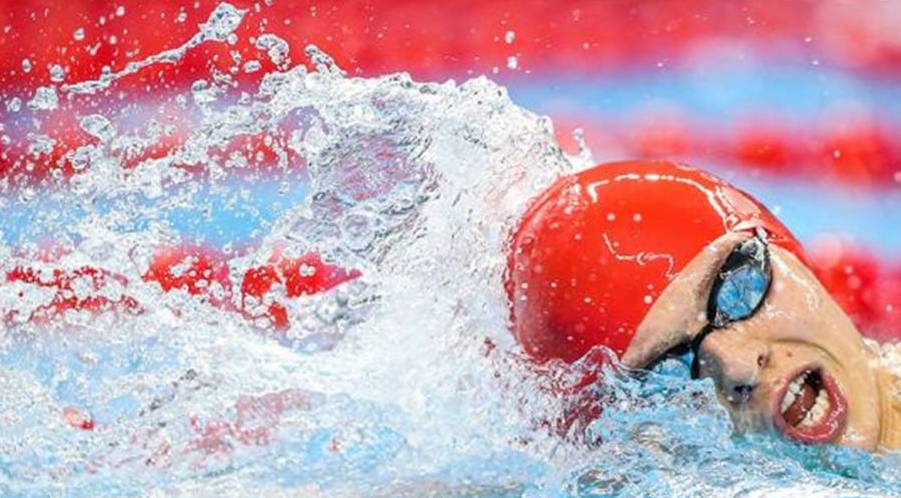
Swimming is an important lifelong skill which can offer something for everyone. Learning to swim will introduce you to a whole new world of water-based activities in the pool and beyond – for example – surfing, rowing, canoeing, fishing, sailing, triathlon… the list goes on! Whatever your age or ability, it’s a great form of all-round exercise and provides a way to be more active, stay healthy and progress into competition and other aquatic disciplines (such as artistic swimming, diving and water polo).
Your local pool is very often the best place to start and they will offer a programme of activities which cater for local needs. As you progress and swim more regularly and develop your skills, you may wish to consider joining a local club which is a great way to make new friends, improve your swimming and motivate you to exercise regularly.
Clubs across the region provide the opportunity to develop your skills even further and to specialise in strokes, short or long distance events and open water swimming. They provide a doorway into competitive swimming on a local, district, county, regional and national level. Swimming clubs also have a lively social scene away from the pool, with trips away and nights out. They also provide the opportunity to get involved in other swimming related activities such as lifesaving, coaching, officiating and doing many other club related roles.
Discover the essentials of competitive swimming and para-swimming. From training terms like drills and sets to understanding classifications and multi-class racing, this video is your go-to guide for getting started, created by Swim England
Swimmer Development
Swimmers of all levels and abilities should be celebrated in our aquatics community. Water-based activities like swimming are great for both physical and mental health, and the memories and friendships made will last a lifetime. As well as developing sport-specific technical and physical components, swimmers will also pick up a number of transferable lifestyle skills (time management, discipline, resilience, goal setting, confidence, teamwork, perseverance, communication skills) that will serve them well throughout their lives.
Swimming for Enjoyment
Parents and carers always highlight water safety as the number one reason for signing their child up to swimming lessons – a very important reason at that! However, did you know that swimming lessons are also building lifelong skills for your child that will benefit them both in and out of the water for years to come.
- ✔️Boosts Confidence: More than 84% of parents report that swimming lessons have helped improve their child’s confidence and self-esteem.
- ✔️Improves Focus: Nearly 7 in 10 parents have noticed that their child’s concentration improves after swimming lessons an added benefit that supports success in school and beyond.
- ✔️Fosters Friendships: 68% of parents agree that swimming lessons have helped their children make new friends, creating bonds that extend beyond the pool.
- ✔️Brings Happiness: Most importantly, swimming lessons bring joy! 91% of parents say their child truly enjoys their time in the water, making learning to swim a fun and memorable experience.
Swimming for Health Benefits
Swim England’s Health and Wellbeing benefits of swimming report (2017) highlighted the unique benefits of water that make it the ideal place for people of all ages and levels of ability to exercise. It is particularly beneficial for those with long term health conditions.
Taking this report into account, and insights on swimming participation and learning from other projects like the Dementia Friendly Swimming project, Swim England have developed the ‘Water Wellbeing’ model which includes all of the essential components, to be able to offer the best possible experience for people who are inactive and/or have long term health conditions, to become physically active in water. They have designed a whole library of resources and factsheets that you can access for free!
Read more here: https://www.swimming.org/swimengland/health-and-wellbeing/
Swimming to be Competitive
Swimmers wishing to track their progress and set targets for themselves can race against other competitors in organised competitions. Thousands of swimming competitions take place in England for kids and adults every year and most include swimmers with disabilities.
To do so you’ll need to be a member of a swimming club for the majority of swimming competitions in England, and a Club Compete member for the highest three levels of competition.
For most swimming competitions athletes are split into groups based on their age on 31 December that year. However, there are some competitions for which age groups are based on a swimmer’s age on the day of competition. They take place in either a 25m or a 50m pool. The 25m events are called short course and the 50m long course. From club galas to National level events, there are lots of things to consider and learn about to help you get the most from your experience – so here’s some more information you may find useful!
Licensed Meets are swimming events licensed by Swim England. This means they have to meet certain standards to ensure fair competition. Licensed meets will have trained officials and volunteers organising and delivering the event, and they will follow the Technical Rules of the sport of swimming.
The English swimming licensed meets calendar contains a range of ‘open’ meets, designed to give all competitive swimmers in England the chance to achieve their true potential.
Guide to the four levels of licensed meets
All licensed meets are subject to Swim England Regulations and the Swim England Technical Rules of Racing. They are graded into four levels.
- Level 1 Meets are long course (50m) only and cover National, Regional and County Championships. Their purpose is to enable athletes to achieve qualifying times for entry into National, Regional and County Championships.
- Level 2 Meets are short course (25m) only and cover National, Regional and County Championships. Their purpose is to enable athletes to achieve qualifying times for entry into National, Regional and County Championships in short course.
- Level 3 Meets are long and short course events. Their purpose is to enable athletes to achieve times for entry into Regional and County Championships and other Meets at Level 1 or Level 2.
- Level 4 Meets are entry level events in pools 25m or greater. Borough Championships are an example. They are for inexperienced athletes and swimmers seeking to compete outside their club environment. If times are good athletes progress to Level 3 Meets.
Performance Pathways
So you’ve learned to swim and have joined one of the hundreds of swimming clubs in England. What’s the next step to becoming an elite swimmer?
It’s not an easy pathway – only the fiercest, strongest and most committed athletes make it to the top of the sport! It may be your dream to stand on the blocks at the Olympic or Paralympic Games, buzzing from the noise of the packed-out crowd as you prepare to race for Team GB and a place in the history books.
But guess what? It’s also the dream of the swimmer in the lane next to you! And probably the swimmer in the lane next to them as well… So keep your head down, listen to your coach, don’t take anything for granted and follow our 5 steps to becoming an elite swimmer.
Becoming an elite swimmer
Compete abroad – you might be one of the best junior swimmers in the country, but how do you stack up against rivals from further afield? Racing at international competitions, away from home comforts and your coach, can be a challenging process but one that will improve your mental toughness and experience. Both British Swimming and England Talent Swimming select junior squads to compete at international competitions every year.
Make it to nationals – the first big target for any young swimmer is to make it to the pinnacle of the sport in England and swim at nationals – either the British Summer Championships or the Swim England National Summer Championships. Whether it be qualifying through your individual ranking or with a relay team, competing at your first nationals is a huge step on the road to becoming an elite swimmer and a memory even the best international athletes never forget!
Ace it at nationals – once you’ve qualified for nationals, the next step is reaching that podium. If you’re serious about becoming an elite swimmer, it should be your goal to touch the wall first in every race! A medal at nationals should also put you high in the age group rankings for the year and in the frame for selection to the England Talent national talent squads.
Train with the best – Swim England has 10 regional Beacon Programme sites across the country where the very best senior and junior swimmers are invited to train with some of the top coaches in England. Give yourself the best chance of progressing by swimming in world class facilities and training with those who share your winning attitude.
Fine tune your technique – while your coach will always be working on ways to improve your form, try and secure a place on the regional and national England Talent training camps where some of the top coaches in England can give you feedback and advice.
Pathways in the North East Region
The North East Region has two Performance clubs in Yorkshire (City of Leeds SC and City of Sheffield Swim Squad), and within Northumberland and Durham, the county supports the Northumberland and Durham Training Programme (NDTP) which runs regular long course sessions at Sunderland Aquatics Centre for the County’s highest ranked senior, youth and age group swimmers.
The North East Region selects swimmers to attend our Talent Camps on an annual basis. Camps usually involve a mix of pool and land based training for the U13yrs age group. We deliver coach and athlete education sessions on nutrition, goal setting and time management skills. Our plan in future is to extend this out to a number of other age groups so that more swimmers can benefit from this type of development opportunity.
The next step after attending our Regional camps is to aim for the National Talent Camps.
Swim England has a Talent Development programme that takes youngsters who have already shown promise and gives them access to quality coaching, athlete educational schemes and physiotherapy screening within a training camp environment, in order to prepare them for future international competition. These camps run at a county and regional level before progressing onto a national and international level. Once swimmers are selected for International squads, they will usually become involved in the performance pathway through British Swimming.
British Swimming is the national governing body for Swimming, Diving, Artistic Swimming, Water Polo and Open Water in Great Britain. It is responsible internationally for the high performance representation of the sport. The members of British Swimming are the three Home Country national governing bodies of England (Swim England), Scotland (Scottish Swimming) and Wales (Swim Wales).
British Swimming seeks to enable its athletes to achieve gold medal success at the Olympics, Paralympics, World Championships and Commonwealth Games.
